
Specification reference
Two Rulebooks Govern Your Extraction Lab. Most Guidance Covers One.
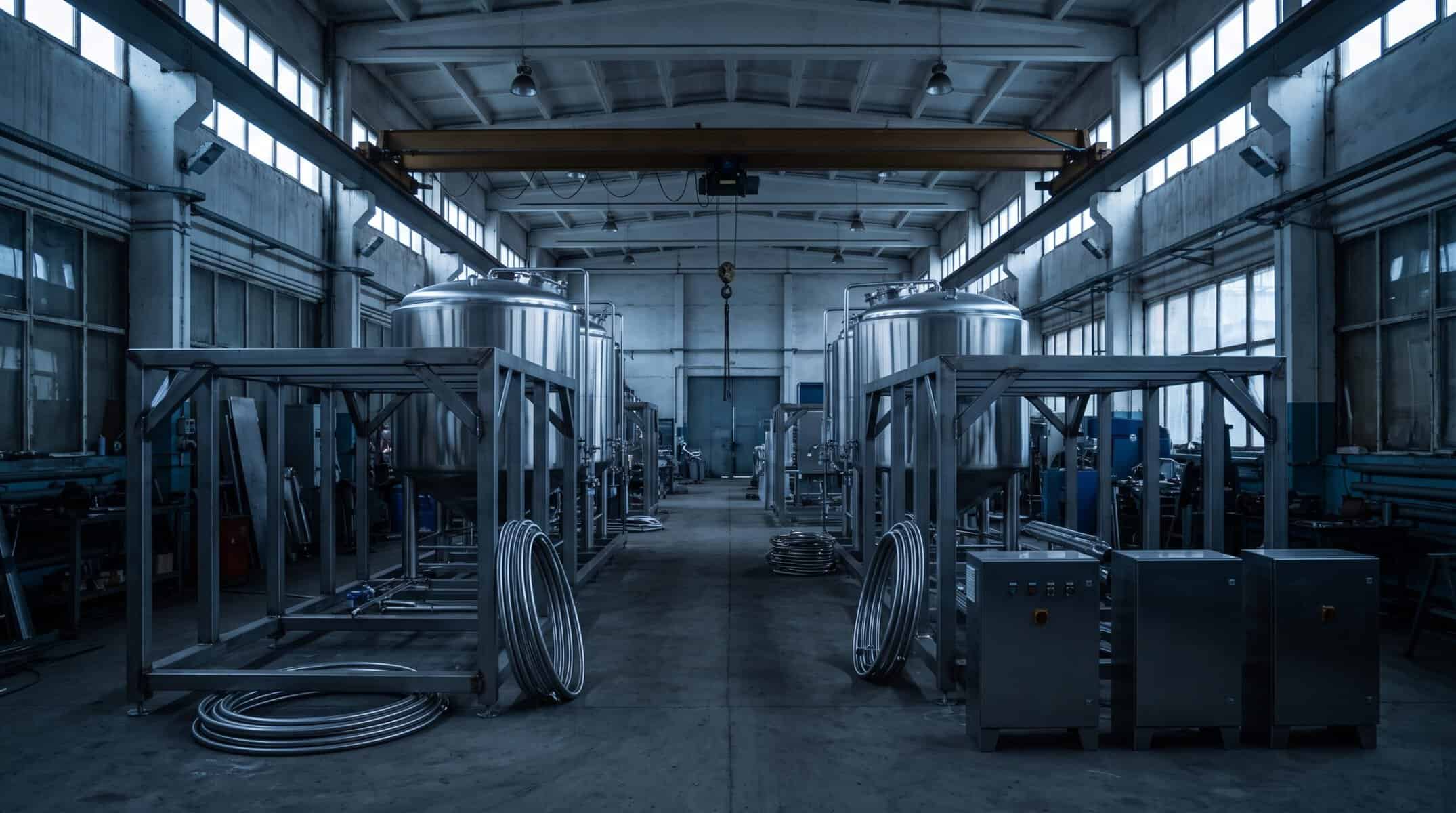
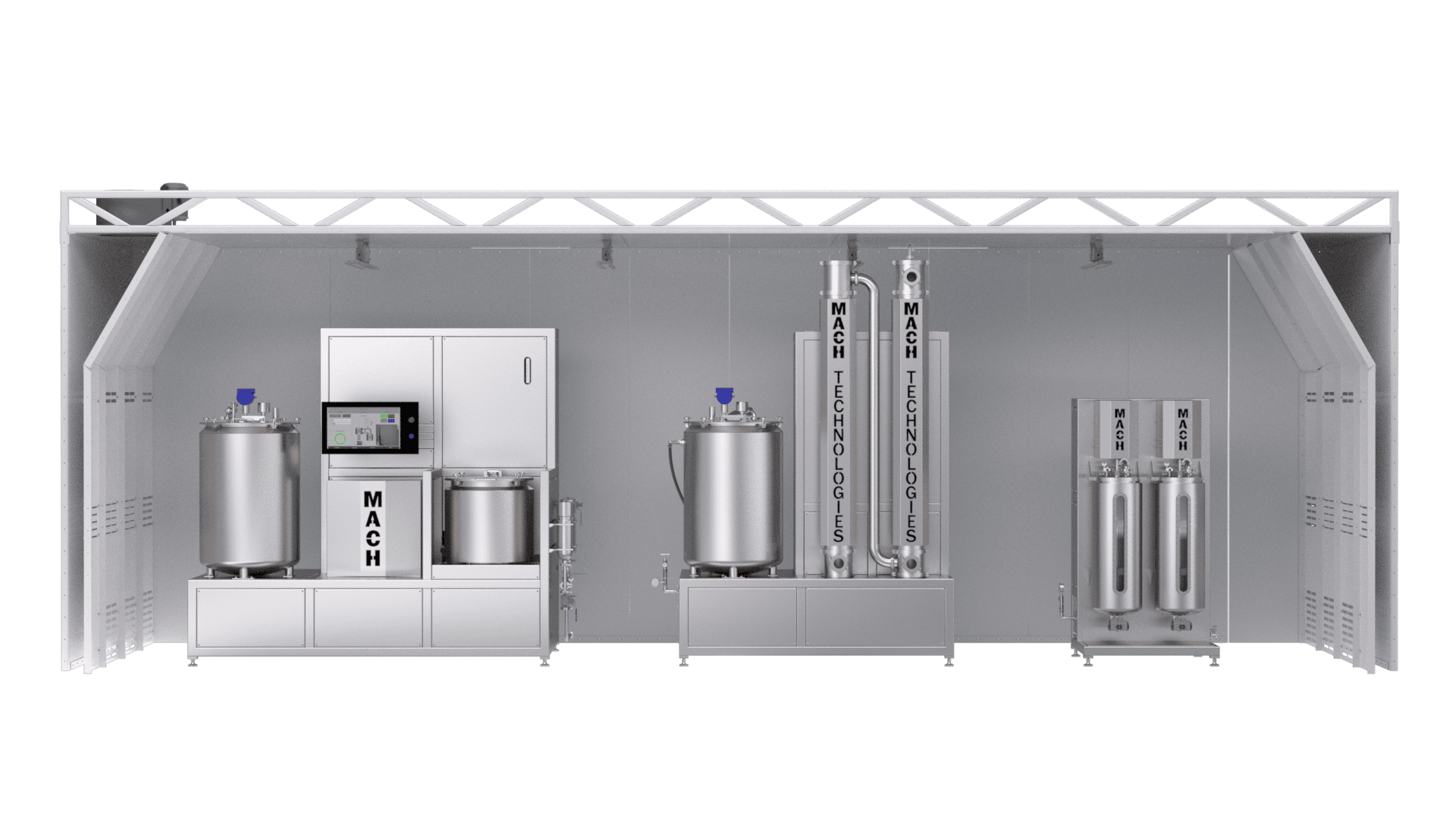
MACH Technologies designs, fabricates, assembles and tests every system in our vertically integrated Michigan facility, built to CE, IECEx, UL 508A, PSI and ASME.
An extraction lab answers to two independent frameworks at the same time. One is a GMP quality system: documentation, qualification, cleanable contact surfaces, traceability. The other is hazardous-location classification: an electrical and fire framework that decides where the suite can physically sit and what may be energized inside it. Different people enforce them. Most published guidance covers one and ignores the other, which is why rooms get designed twice. This page covers both.
One thing to state up front, because the market blurs it: no manufacturer can sell GMP certified equipment, and that includes us. GMP is a standard a facility and a process operate to, not a stamp a machine carries off the assembly floor. What we build to, and can name, are CE, IECEx, UL 508A, PSI and ASME.
Written for the engineer locking specifications before construction.
- CE
- IECEx
- UL 508A
- PSI
- ASME
Two audiences, two document sets, one room.
The Quality Rulebook and the Classification Rulebook Are Not the Same Document
Rulebook one is GMP. It is a quality system, enforced through written procedures, equipment qualification, cleanable and non-absorptive contact surfaces, and a traceable record of what happened to each batch. Its audience is your quality unit, your auditors and your customers. Nothing in it is triggered by a fire marshal.
Rulebook two is hazardous-location classification. It is an electrical and fire framework rooted in NEC Article 500 and 501, NFPA 30 and whichever editions of the building and fire codes your jurisdiction has actually adopted. Its audience is the Authority Having Jurisdiction, and the specific division determination is worked through further down this page. Confirm the adopted editions locally before you design against them, because they vary.
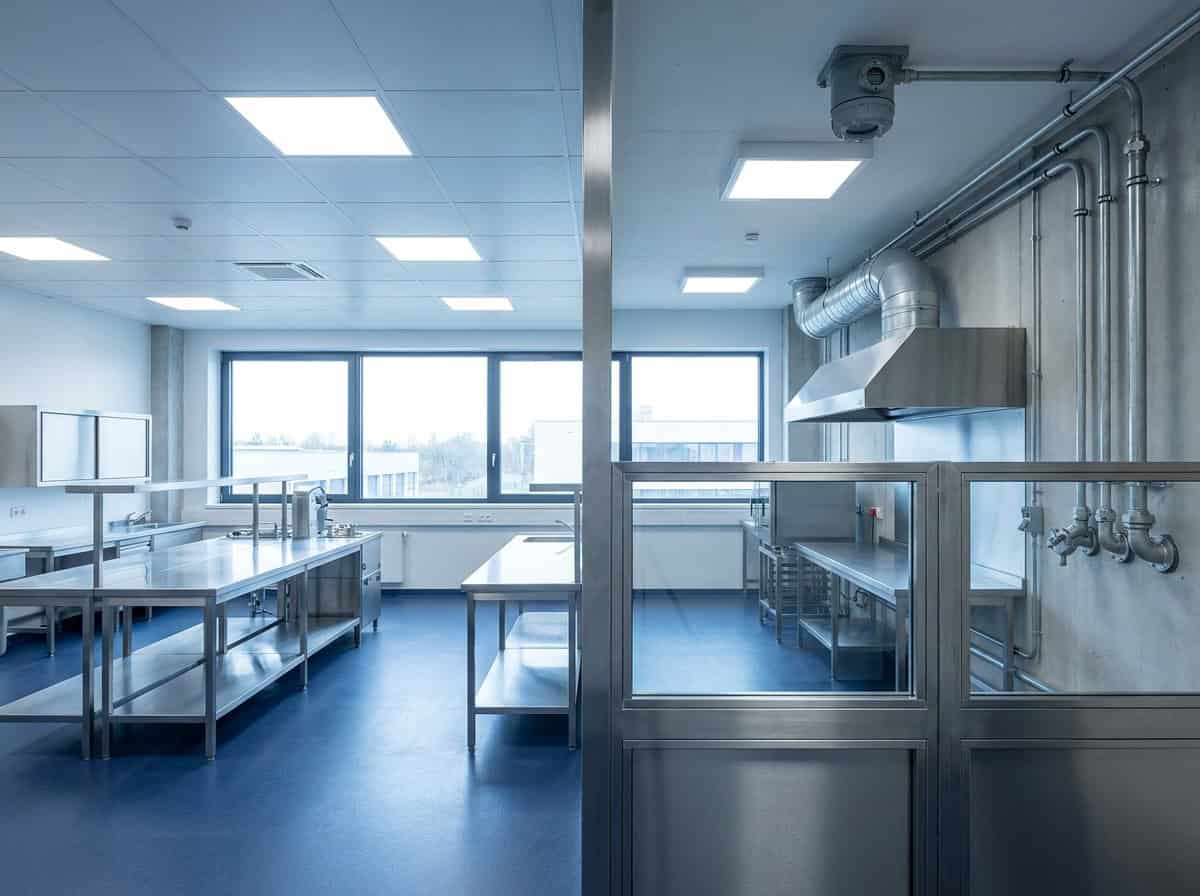
The two frameworks optimize for different things and occasionally pull against each other. A cleanroom pressure cascade and a hazardous exhaust strategy both want authority over the air in the same room. They have to be reconciled deliberately, not designed in separate meetings and merged later.
This is also why the best available guidance is incomplete in predictable ways. Pharmaceutical and bioprocessing GMP material is genuinely strong on surfaces, airflow and qualification, but it was written for processes that never handle a flammable solvent, so it is silent on the single constraint that most often dictates where an extraction suite can be located in a building footprint. Extraction equipment marketing runs the opposite error: it asserts GMP language freely and never addresses classification at all.
The sequence we work to avoids both failures. Define the process first, including how solvent is actually handled at every transfer. Classify the space second, against your AHJ's adopted code. Specify equipment third, so it fits both frameworks. Reversing that order, buying a system and then asking what room it needs, is how a layout gets paid for twice.
Extraction equipment must be installed, permitted and operated in accordance with all applicable federal, state and local fire, building and electrical codes, including Class I Division 1 requirements where applicable.
Qualification & Intended Use
There Is No Such Thing as GMP Certified Equipment
Compliance is relative to an intended use only the buyer can define.
No regulatory authority certifies a machine as GMP-compliant. A manufacturer advertising GMP certified equipment is describing a marketing category, not a regulatory one. The reason is structural: there is no single equipment design that is compliant for every process, so compliance can only be assessed against a stated intended use. That statement is the buyer's to make.
The document that makes it is a User Requirements Specification. A serious URS captures production targets, process parameters and their acceptable ranges, material contact surfaces, cleaning method and frequency, instrumentation and data requirements, and what has to be traceable afterward. It is written by the operation that will run the equipment, not by the vendor selling it. A manufacturer who quotes without asking for one is quoting a catalog item and calling it a solution.
From there the lifecycle is well established. Design Qualification confirms the proposed design actually satisfies the URS. Installation Qualification confirms the system arrived and was installed as specified. Operational Qualification confirms it operates across its intended range. Performance Qualification confirms it performs with your material, under your procedures, run by your operators. Confirm scope and documentation expectations with your quality unit, since the applicable FDA and EU GMP frameworks are interpreted against your own process.
DQ is the step most botanical operations skip entirely, and skipping it is expensive, because DQ is where a requirements list becomes a design commitment somebody signed.
Where our responsibility ends
Our role is specific and worth stating plainly. MACH builds to the specification, and every system is designed, fabricated, assembled and tested in our own Michigan facility before it ships. Factory acceptance testing happens there, which is where control-system and instrumentation errors are least costly to correct, because the engineers who built the system are standing next to it. We support site acceptance testing, installation, commissioning and operator training on arrival. The operator retains legal responsibility for qualification, including when documentation ships with the equipment. Anyone who tells you otherwise is selling you a liability you still own.

Equipment specification review
Four Things to Check on Any Extraction Equipment Quote
GMP principles become useful the moment they turn into questions a vendor has to answer in writing.
-
01
Material contact surfaces.
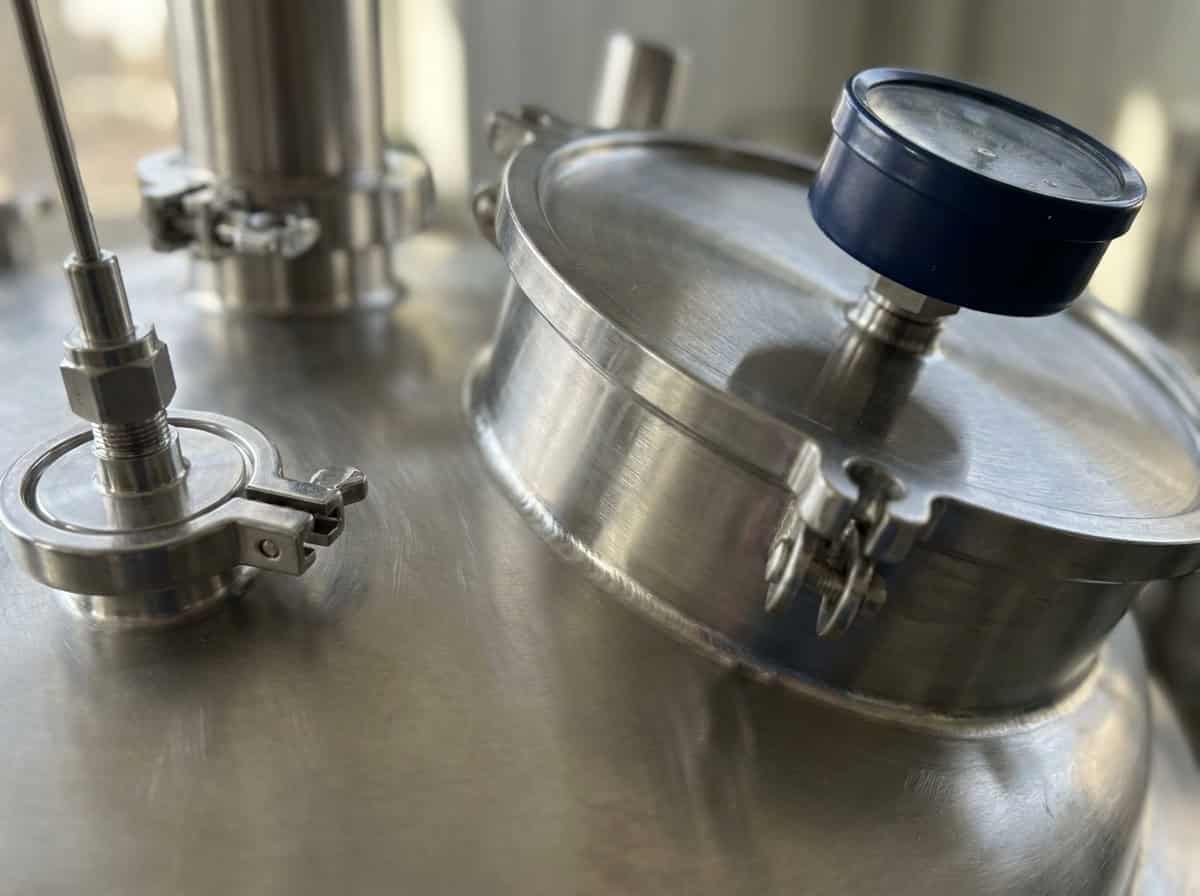
Ask which alloy is specified for which surface, and why that one. Ask about weld finish and crevice elimination at joints. Ask which gasket material is selected against your solvent and your temperature range. A manufacturer should be able to state the specification rather than describe the metal as stainless and move on. The answer separates real engineering from brochure language.
-
02
Cleanability as geometry, not procedure.
Dead legs, low points that pool and components that require partial disassembly to reach will defeat any SOP written to compensate for them. A system that is difficult to clean gets cleaned inconsistently on a busy production day, whatever the procedure says. Look for drainable geometry, accessible instrumentation and assemblies a technician can service without a crane.
-
03
Closed processing and instrumentation.
Closed-loop handling reduces operator exposure and contamination risk, and it does something else that belongs in a capital conversation: it can help keep a solvent room in the lower classification. Our ethanol extraction systems are built around that principle, in the automated EES Series and the semi-automated M Series, alongside the AHES and MHES hydrocarbon extraction systems, WFDS Series wiped film distillation systems, and automated solvent recovery including the ASR-20 automated solvent recovery system.
-
04
Data capture.
Instrumentation that records critical process parameters with timestamps is what produces a defensible batch record. If a parameter was not logged, the run cannot be defended after the fact, no matter how well it went. Ask what is recorded, at what interval, and how it is exported.
Underneath all four is one engineering principle. A process that depends on constant human judgment drifts. A process that depends on controls, sensors and written procedures holds, which is what makes qualification a structured exercise instead of an argument. Throughput, yield, purity and solvent recovery figures vary with input material, system configuration and process parameters; published figures are not a guarantee of results.
The Marks We Actually Hold, and What Each One Governs
CE, IECEx, UL 508A, PSI and ASME. Named, with nothing implied beyond their scope.
-
UL 508A Control Panels
Industrial control panels built and labeled to UL 508A. A listed panel is what an electrical inspector looks for, and where the panel sits relative to the classified boundary is a design decision made early, not an afterthought during rough-in.
-
ASME and PSI Pressure Equipment
Vessels and pressure-bearing components built to ASME with PSI marking. On hydrocarbon systems, pressure specification is the first question worth asking, before throughput and before price.
-
CE and IECEx
Marks that matter for international installations and for equipment evaluated against the IEC zone framework rather than the North American division framework. Buyers exporting or operating outside the United States should confirm which framework their jurisdiction applies.
-
Qualification Documentation Support
Factory acceptance test records before shipment, installation and commissioning support, and operator training documentation your quality unit can file against its own protocols — support for your qualification program, not a certificate we issue.
Hazardous Location Classification
Classification Follows the Process, Not the Solvent on the Drum
What Division 1 versus Division 2 actually cascades into, and where the extraction suite ends up as a result.
Class I concerns flammable gas or vapor. Division 1 assumes ignitable concentrations are present during normal operation. Division 2 assumes they appear only under abnormal conditions, such as a leak, a spill or a failed seal. The determination is made against how your process handles solvent, not against the name printed on the drum.
In practice that means handling steps drive the outcome. Cold, closed-loop ethanol processing is commonly evaluated as the lower classification. Open transfer, warm solvent handling, manual filtration and in-room solvent recovery in botanical processing can all put vapor into the room during normal operation and push a reviewer toward Division 1. Hydrocarbon processing is conservatively treated as Division 1 by most reviewers, which is worth planning for from the start on systems like the AHES-40 automated hydrocarbon extraction system.
The classification then cascades. Electrical equipment and wiring methods inside the boundary must be rated for the classification. Boundary transitions require sealing. Gas detection, ventilation and interlocks come into scope, along with deflagration control where it is triggered. There is a layout consequence people discover late: a vented space needs exterior wall or roof access, so the extraction suite gets located in the building footprint before almost anything else.
The standard mitigation is discipline about the boundary. Keep inside it only what must be inside it. Chillers, control panels, vacuum pumps and downstream post-processing generally belong in unclassified space with connections passing through the wall. Both a classified enclosure and a field-built room are legitimate paths; we build the EE-2 Series extraction enclosures as part of our lineup for operations that want the classified volume delivered as a defined assembly rather than constructed on site.
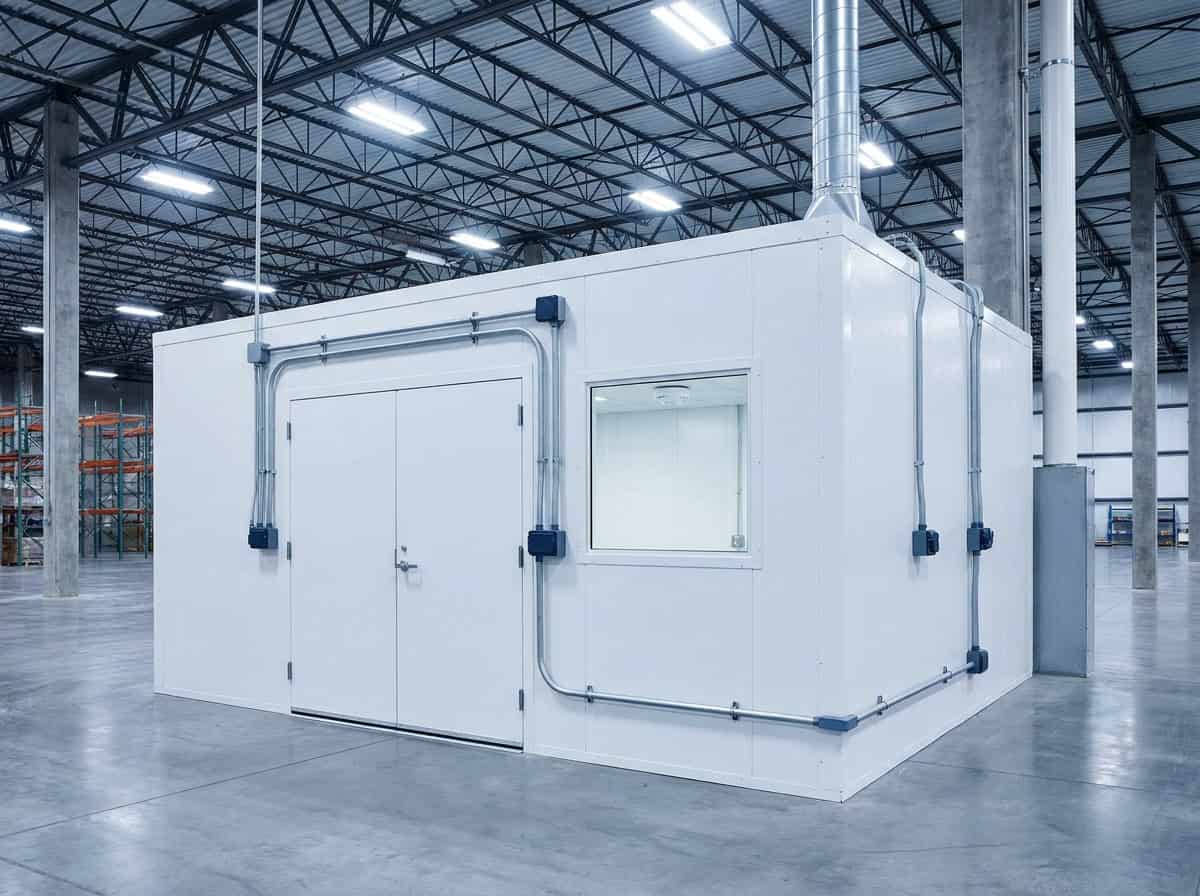
Lab Design & Buildout
Specify the Room and the Equipment Together, or Specify Them Twice
Most redesigns trace back to the same cause: two parties, two schedules, one room.
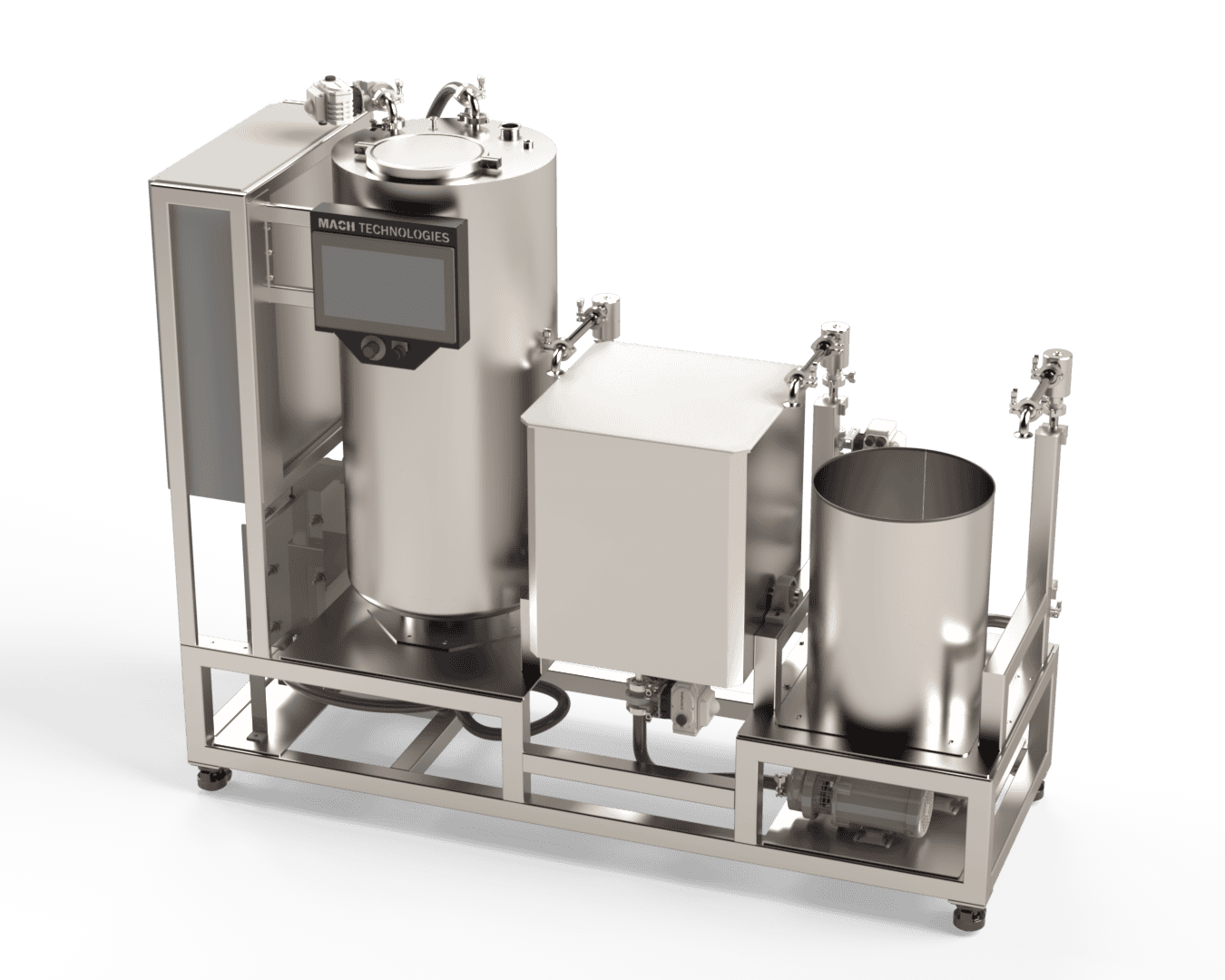
Labs get redesigned because the equipment and the space are specified by different people at different times. The mechanical contractor sizes utilities from nameplate guesses, the equipment arrives with a different real draw, and the exhaust strategy was fixed before anyone asked how solvent would be transferred. Specifying both together is not a premium service. It is the cheaper order of operations.
In practice that looks like a few concrete habits. Size utilities against actual equipment draw rather than nameplate maximums, and plan power, exhaust, chilled fluid and compressed air as one connected set instead of four trades working from separate drawings. Lay out material and personnel flow so product moves in one direction and crosses the classified boundary as few times as possible. Place equipment for the room as it will actually be populated, leaving service access and cleaning access intact once every skid is in place rather than only on day one.
We cover the handoff directly: installation, commissioning and operator training, plus on-demand technical support afterward. Training is a compliance surface in its own right, because a documented procedure only holds if the operators running it were qualified against it.
The Equipment Ladder
Across the full capabilities and applications range, the ladder is consistent. Ethanol extraction systems in the EES and M Series. Hydrocarbon extraction systems in the AHES and MHES Series. Solventless trichome and ice-water systems in the TSS Series and ATS Pro. Post-processing and refinement systems covering winterization, solvent recovery, decarboxylation, terpene distillation in the TES Series, wiped film distillation including the WFDS-1S wiped film distillation system, isolate production and DMU Series crystallization. If you are earlier than that, start with what an extraction lab actually requires to install.
Scope Statement
The through-line, stated plainly: MACH Technologies manufactures and sells processing equipment and lab design. It does not cultivate, produce, sell or distribute botanical material or any botanical end product. We do not process, toll or test, and the operator owns the compliance program. Nothing here is medical advice, and no MACH Technologies equipment or the products made with it are represented as diagnosing, treating, curing or preventing any disease. Operators are responsible for verifying that their intended use is lawful in their jurisdiction.
Engineering consultation
Bring Us the Process. We’ll Work Through the Specification.
Tell us your process, target throughput and jurisdiction, and our engineering team will work through the classification implications and equipment specification with you. Systems designed, fabricated, assembled and tested in our vertically integrated Michigan facility. You can also reach us by phone at 855.798.4661.