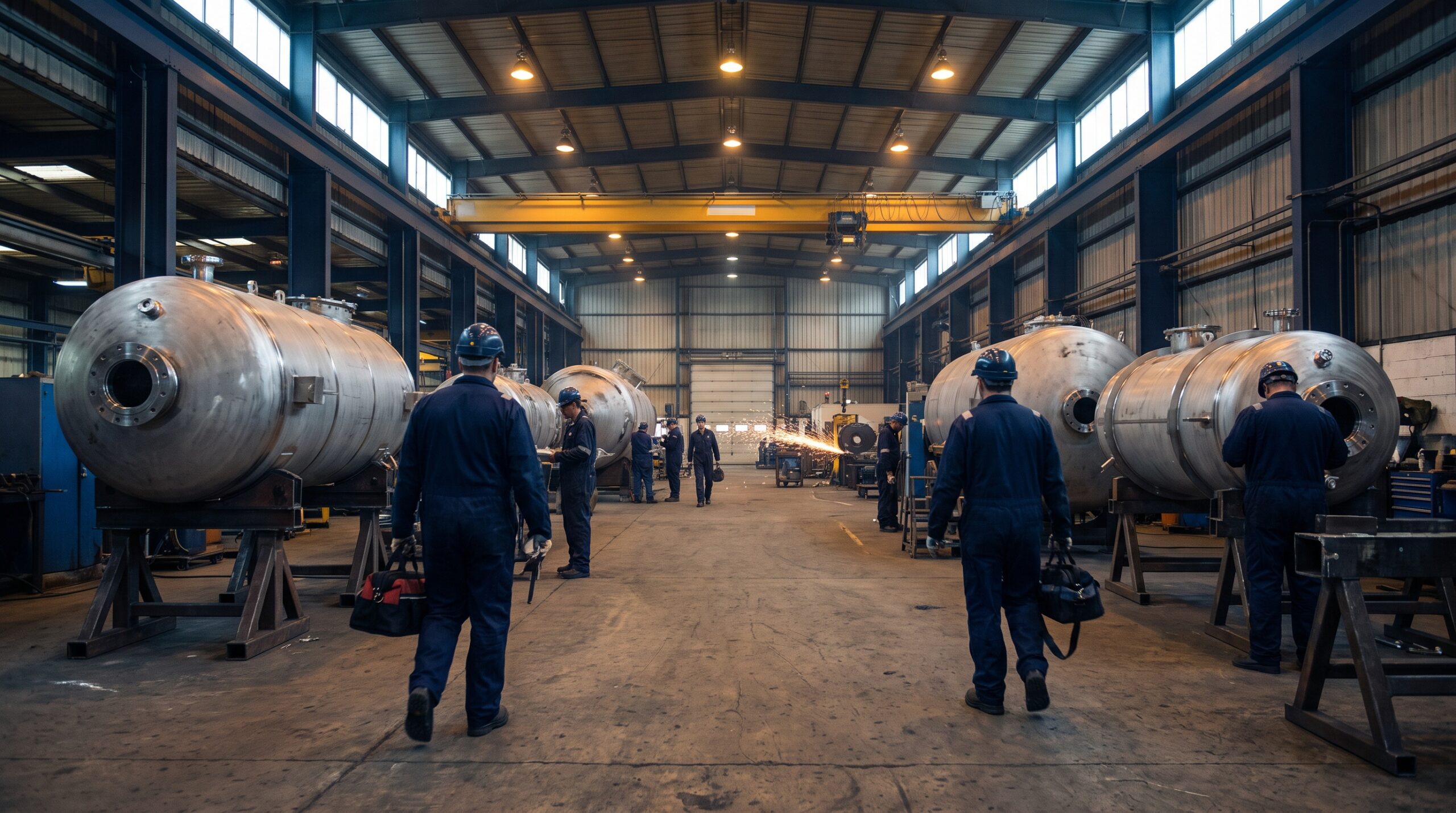

Pressure equipment specification
ASME Section VIII Pressure Equipment for Extraction Systems: What to Require
Equipment built to CE, IECEx, UL 508A, PSI and ASME compliance marks — designed, fabricated, assembled and tested in our vertically integrated Michigan facility, and sold nationally across the United States.
ASME Boiler and Pressure Vessel Code Section VIII, Division 1 sets the rules of construction for vessels operating above 15 psig, fired or unfired. In a solvent-based line that captures nearly every pressure-bearing component you will buy: material columns, collection vessels, jacketed solvent storage and recovery tanks, receivers and the relief devices that protect them. So the real question on a purchase order is not whether a vessel holds pressure. It is whether it arrives with a record an inspector can read.
That is the distinction this page is built around. A system that "meets ASME standards" and a system that is ASME-rated are not the same purchase, and the difference is paperwork. Bring the specification to our engineering team before the room is drawn, not after.
Specification Guidance
"ASME-Rated" and "Built to ASME" Are Not the Same Purchase
Three separate things get collapsed into one word on a quote. Separating them is what protects the purchase.
The ASME Certification Mark — what most buyers call the U-stamp — is held by a shop, not by a tank. It certifies that a fabricator operates an audited quality control system under the Boiler and Pressure Vessel Code. It says nothing on its own about the specific vessel sitting on your receiving dock, and a fabricator can build to Section VIII rules without holding the certificate at all.
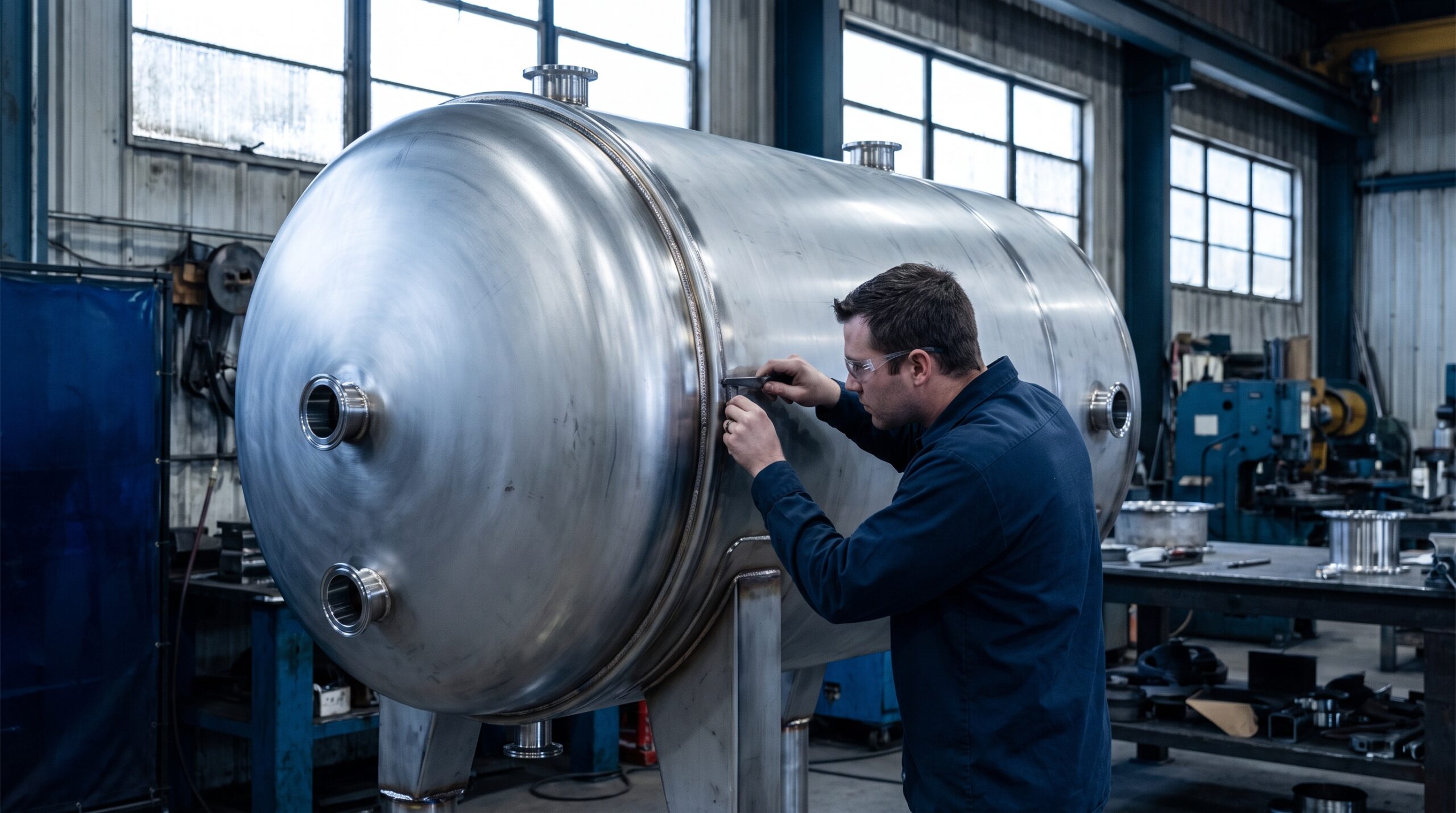
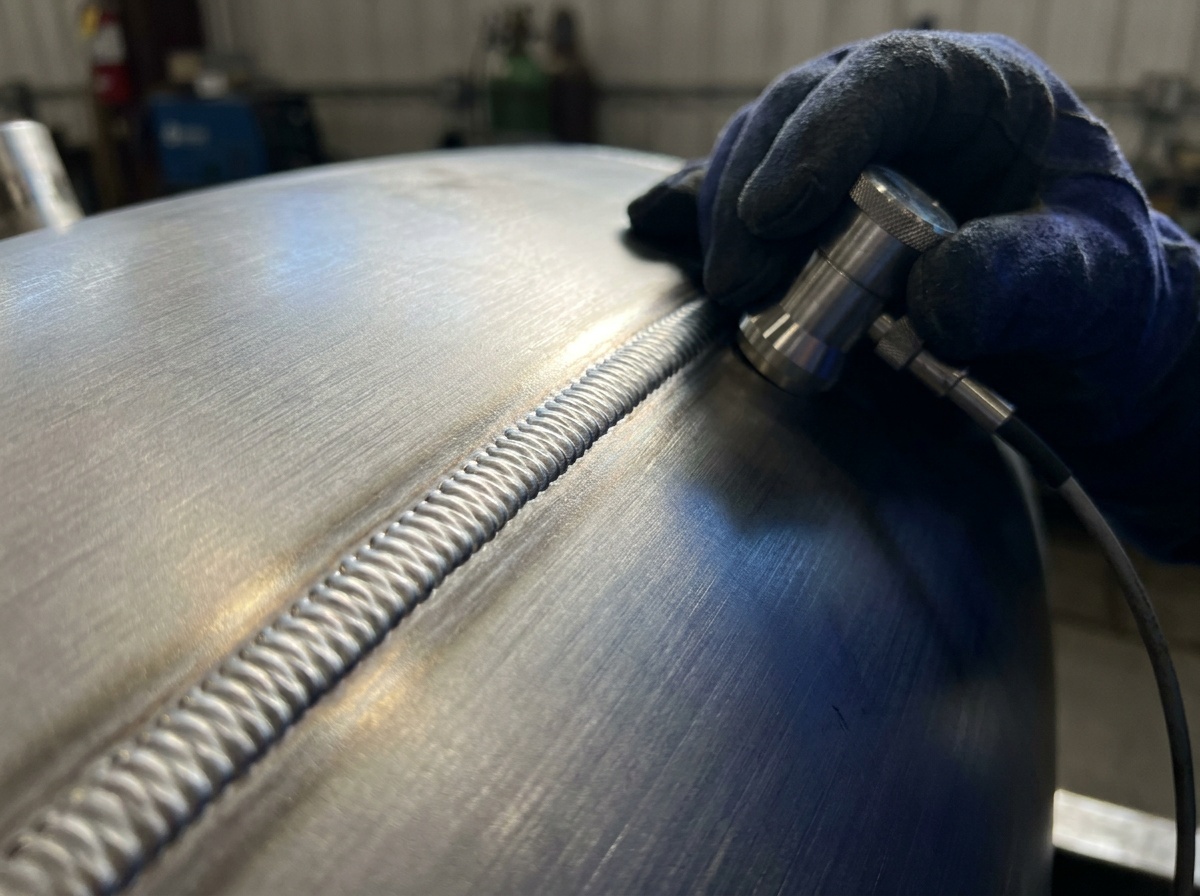
The per-vessel record is the Manufacturer's Data Report, Form U-1 or U-1A. The manufacturer completes it and a third-party Authorized Inspector co-signs it after reviewing the design calculations and witnessing the hydrostatic test. Without that signed form, the vessel is non-code regardless of what is physically stamped into the nameplate. The form ties a certification to a serial number — which is the only linkage that survives a plan review.
National Board registration is a third thing, and an optional one in many places. It is an archival step, and whether you need it is driven by your state, your insurer and your own purchase specification, not by the fabricator's preference. A vessel can be fully code-compliant and inspector-signed without ever being registered.
Division matters for sizing, not for status. Division 1 runs to roughly 3,000 psi design pressure and covers the service extraction work actually operates in; Division 2's alternative rules carry into the higher band above that. If a supplier quotes you a Division without quoting you a design pressure, you have been given a label instead of a number.
So when two quotes look identical, the question that resolves them is not "is it ASME?" It is "send me the U-1." Ask it of every supplier on the bid list. The same discipline applies when you specify a closed loop extraction system as a complete assembly rather than as a parts list.
Procurement checklist
The Four Documents to Require Before You Accept a Pressure Vessel
Put these on the purchase specification, not on a post-delivery wish list.
-
01
Manufacturer's Data Report
The completed U-1 or U-1A, co-signed by the Authorized Inspector. It ties the certification to the serial number of the hardware actually shipped against your purchase order.
-
02
Welding Qualification Records
Welding procedure specifications and procedure qualification records qualified under ASME Section IX. Ask also for evidence that the individual welders' qualifications were active on the build date.
-
03
Material Traceability
Mill certifications and heat numbers tracing the pressure-boundary material back to an approved material specification. Traceability is what makes the design calculations mean anything.
-
04
Examination and Test Records
Non-destructive examination results on the pressure-boundary welds, plus the hydrostatic test record witnessed before the data report was signed. A supplier who cannot produce these is selling a tank.
Code scope boundary
Which Parts of an Extraction System Are Code Pressure Equipment
The boundary between vessel scope and piping scope decides which components generate a data report.
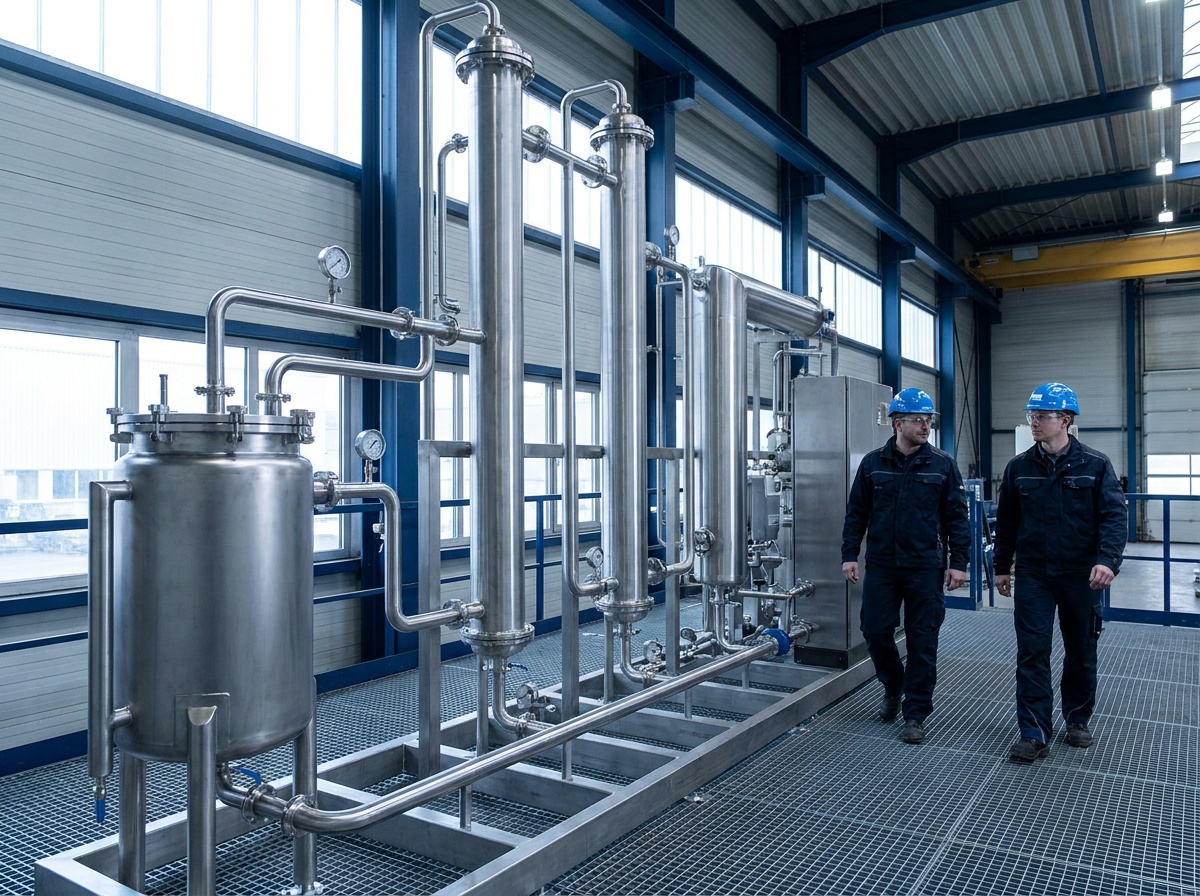
Walk the line and the pressure-bearing population is short and predictable: material columns, collection vessels, jacketed solvent storage and recovery tanks, receivers, and the pressure relief devices protecting each of them. Small-bore sanitary interconnects are typically outside the vessel scope and are governed instead by the pressure ratings of the piping, fittings and clamps. That boundary is worth confirming against the code's own scope exclusions for your configuration, because it determines which components come with a Manufacturer's Data Report and which are specified by fitting rating.
At RFQ time, the vocabulary matters more than the adjectives. Specify maximum allowable working pressure for the shell and for the jacket as two separate numbers, each stated at a temperature. Specify MDMT, the minimum design metal temperature, because that is what decides whether the vessel is rated for the cold-side service your process actually runs. Specify the pressure-boundary material grade and the port schedule — those drive both code compliance and whether the skid integrates without a redesign. Treat relief device sizing and certification as its own line item, not as an accessory bundled into the vessel price.
For reference when you are comparing bids: jacketed vessels offered into this service across the market commonly sit in the range of 250–350 psi shell with a 100–150 psi jacket, stated at temperature, with MDMT down to around -40°F on 304 stainless. Those are market reference ranges observed across suppliers, not MACH product ratings. For as-built design conditions on a specific configuration — including the pressure-bearing components in our AHES Series hydrocarbon extraction systems or recovery-side equipment such as the ASR-60 solvent recovery unit — ask our engineering team for the numbers against your process.
Throughput, yield, purity, and solvent recovery figures vary with input material, system configuration, and process parameters. Published figures are not a guarantee of results.
The Vessel Package Is One Input to the Plan Review
Three different officials sign three different layers, and a flawless vessel file does not carry the other two.
Approval is not granted to a tank. The Authority Having Jurisdiction, the fire official and the electrical inspector each review a different layer — the equipment, the installation, the classified room and the process it runs. A vessel package that is immaculate on its own still stalls if the ventilation, the room classification or the control panel listing does not line up with it.
That is why sequencing is the expensive variable. Design conditions, utility loads and the classification decision have to be locked before construction drawings are issued, because re-drawing a room after equipment selection is the failure that costs real money. The same logic runs forward past delivery: a certified design modified during fabrication, or a system operated outside the process it was certified for, forfeits the standing its documentation gave it. Build and operation are one chain.
Rather than restate work we have already published, start where your gap is. For the room side, see what a C1D1 room requires and the background on C1D1 and C1D2 environments in extraction facilities. For the electrical layer that travels with the submittal, see UL 508A control panels for botanical extraction systems. For how the pieces assemble into one approach, start at compliance-grade extraction lab equipment. We support the handoff with installation, training and technical support.
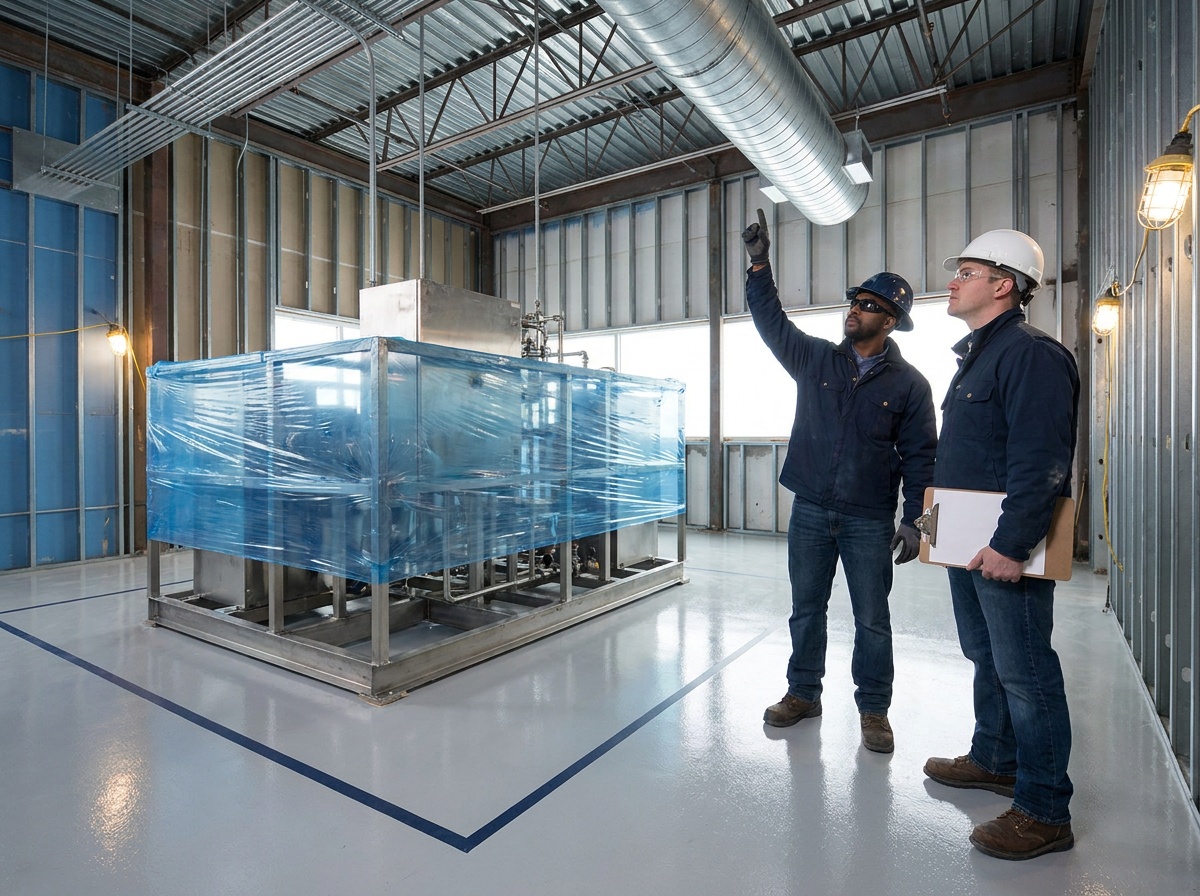
Extraction equipment must be installed, permitted, and operated in accordance with all applicable federal, state, and local fire, building, and electrical codes, including Class I Division 1 requirements where applicable. Consult your Authority Having Jurisdiction (AHJ) before installation.
How it works
Send Us the Process Parameters. We’ll Send Back the Specification.
Solvent, batch size, operating pressure and temperature band, target throughput. Our engineering team returns the vessel and system configuration and the documentation that ships with it. The time to settle a pressure rating is before the construction drawings are issued. Reach us at (855) 798-4661 or through the contact page.
MACH Technologies manufactures and sells processing equipment. It does not cultivate, produce, sell, or distribute cannabis, hemp, or any botanical end product.