
Michigan-built enclosure and extraction systems
C1D1 and C1D2 Extraction Enclosure Systems, Built With the Equipment That Goes Inside Them
Two enclosure lines matched to solvent family: EE-1 Series for Division 1 hydrocarbon work, EE-2 Series for Division 2 ethanol and post-processing work.
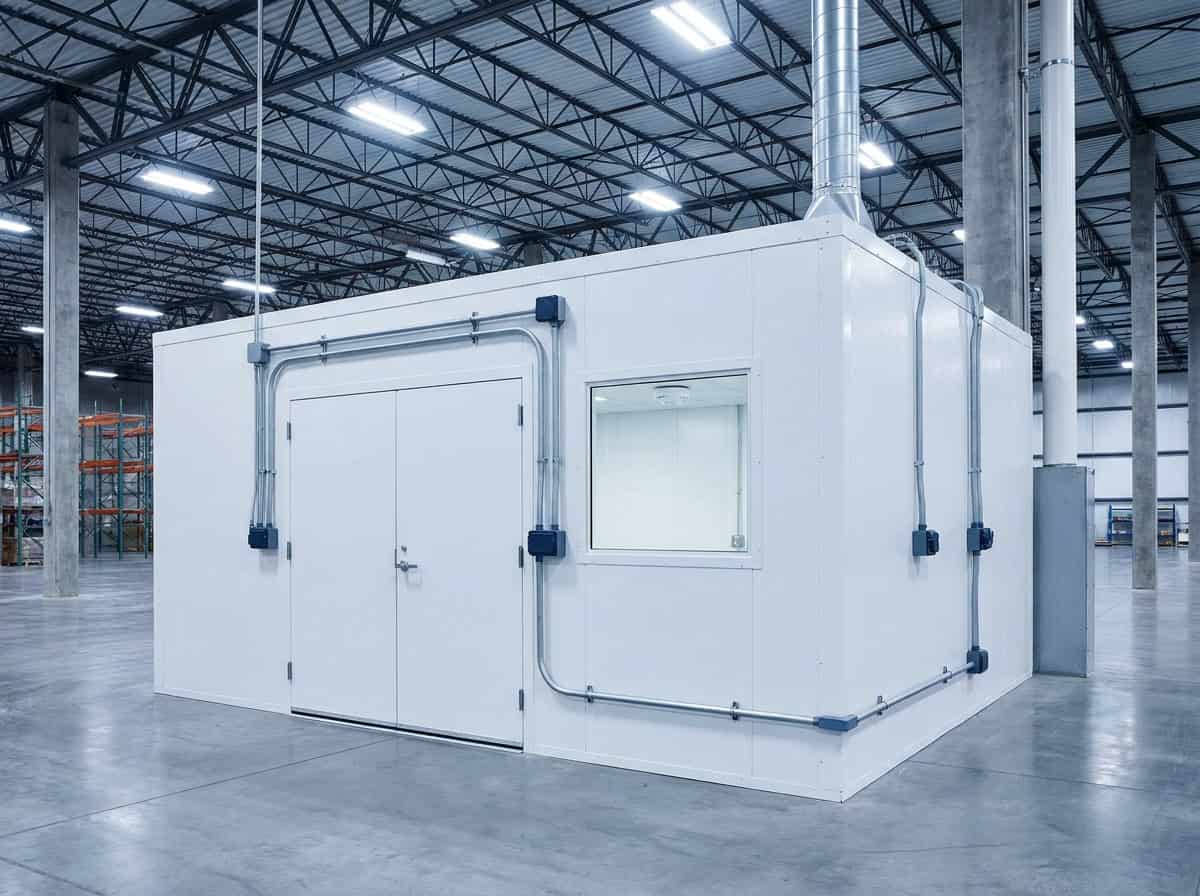
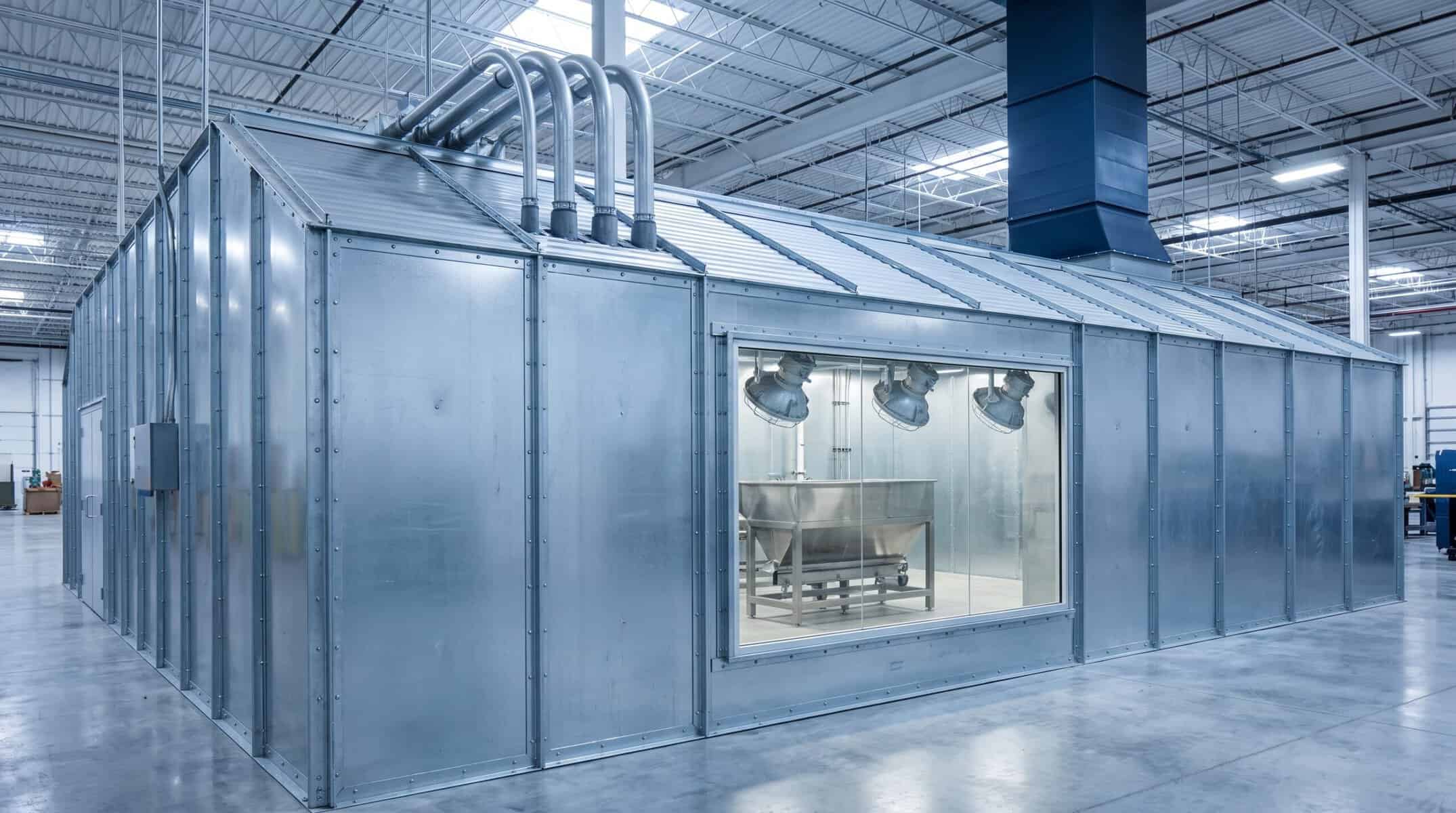
MACH Technologies manufactures the classified enclosure and the extraction system that operates inside it — both designed, fabricated, assembled and tested in our vertically integrated Michigan facility. That means one engineering group sizes the footprint, the utility load and the exhaust routing on one drawing set, instead of two vendors reconciling them on the install date.
Enclosures ship as factory-tested modular panel assemblies with detection, airflow and control subsystems built in, and are set in place without building demolition, indoors or in a containerized layout. Installation, commissioning, operator training and on-demand technical support come from the manufacturer that built both halves.
Engineers mid plan review can reach us directly at 855.798.4661.
- Footprint, utility load and exhaust resolved on one drawing set
- UL 508A on the control panel, ASME on vessels
Area classification
The Classification Follows the Solvent, Not the Room
Solvent first, Division second, enclosure third — in that order.
Most enclosure pages sell a C1D1 booth as the default product. The engineering sequence runs the other way. What you put through the system determines the classification of the space, and the classification determines what the enclosure has to be.
Closed-loop hydrocarbon processing with butane or propane routinely releases flammable vapor during normal operation, which is why that work generally lands in Division 1. Ethanol handled in a properly closed process is commonly treated as Division 2, where vapor is expected only under abnormal or failure conditions. NFPA 70 (the National Electrical Code) Article 500 is the framework that defines this Class and Division scheme and requires classified areas to be documented. OSHA 1910.307 carries the operating requirement: equipment, wiring methods and installations in a hazardous (classified) location must be intrinsically safe or approved for that location and for the ignitable properties of the vapor actually present.
The distinction has budget consequences. Division 2 carries lower electrical component cost and a lighter oversight scope than Division 1, so getting the determination right early is a capital decision, not a paperwork step. It is also not our call to make. Area classification is an engineering determination made by a qualified engineer for a specific facility and confirmed with the Authority Having Jurisdiction. MACH specifies and builds equipment to that classification. We do not assign it, and we are not a testing or compliance-certification body.
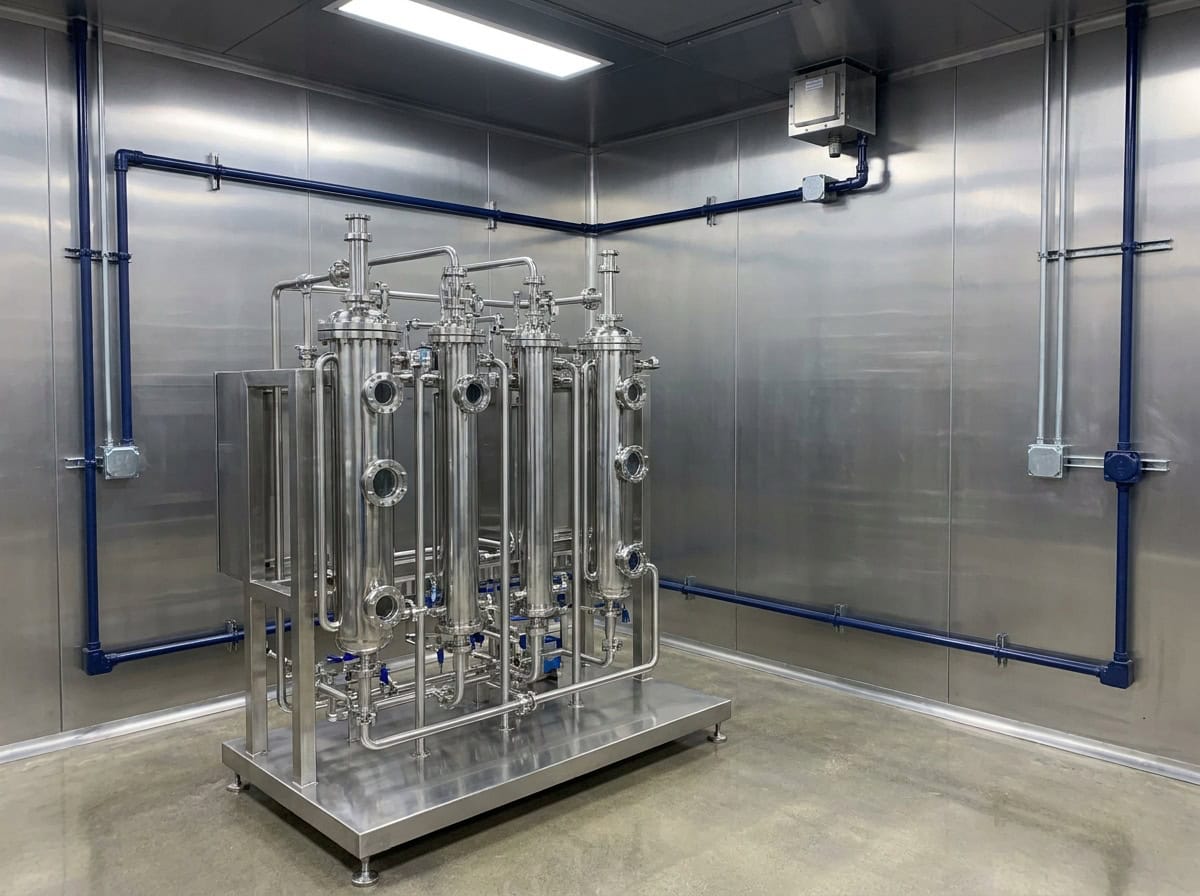
Once the Division is set, the hardware path is straightforward. AHES-40 automated hydrocarbon extraction systems and MHES-20 operator-driven hydrocarbon systems point to an EE-1 Series Division 1 enclosure. EES Series automated ethanol extraction systems and the M Series point to an EE-2 Series Division 2 enclosure. If you are still sizing the method itself, scaling hydrocarbon extraction covers that ground.
Sequence: Solvent selection sets the Division. The Division sets the enclosure line. Footprint, utility load and exhaust resolve on one drawing set before fabrication.
Factory Assembly Scope
What Ships as Part of the Assembly
These subsystems are installed and tested at the factory before shipment. Building power, mechanical tie-ins and fire protection scope are field-connected on site.
-
Solvent-Calibrated LEL Detection
Sensors calibrated to the specific solvent in use, not generic vapor detection. EE-2 Series units ship with ethanol-calibrated LEL sensors that monitor enclosure air and trigger alerts.
-
Integrated Airflow Management
Internal air plenums and blowers for fume evacuation, engineered as part of the enclosure rather than ducted in after the unit is set. Airflow management systems are part of the published EE-2 Series feature set.
-
Modular Panel Construction
Panel sections ship to site and assemble in place, indoors or in a containerized layout. Widths 10' to 20', lengths to 38', 10' or 12' ceiling heights, with an expansion path by adding units.
-
UL 508A Control Panel
The control panel is built to UL 508A, with UL-listed LED lighting and signal alarms and Division 2-rated electrical components pre-installed and factory tested. The mark applies to the panel and listed devices, not to the assembly as a whole.
Enclosure selection
Comparing Enclosure Options on the Axes That Decide the Purchase
EE-1 Series, EE-2 Series and a field-built classified room, on the same six decision axes.
There are three realistic paths to a classified extraction space, and they trade off differently. A factory-assembled enclosure arrives as one evaluated package with a fixed footprint, which means the enclosure constrains the process and scaling means adding another unit. A field-built room fits the process exactly, but every subsystem — electrical, mechanical, detection, fire protection — carries its own design, procurement and inspection cycle. Neither is strictly better; they fail in different places.
| Decision axis | EE-1 Series | EE-2 Series | Field-built classified room |
|---|---|---|---|
| Target classification | Division 1 | Division 2 | Whatever the engineer of record specifies |
| Solvent family served | Hydrocarbon — butane, propane, blended | Ethanol extraction and post-processing | Any, if designed for it |
| Equipment footprint it hosts | Closed-loop column and recovery skids | Centrifuge, winterization and recovery skids | Sized to the process drawing |
| Placement | Indoor or containerized | Indoor or containerized | Inside the building envelope only |
| Expansion path | Add a unit; footprint fixed at purchase | Add a unit; footprint fixed at purchase | Redesign and re-permit the space |
| What you still own on site | Power connection by a licensed electrician, mechanical tie-ins, fire protection scope, AHJ approval | Power connection by a licensed electrician, mechanical tie-ins, fire protection scope, AHJ approval | All of the above, plus the full design and inspection path for every subsystem |
Two questions sit just past this table and deserve their own treatment: how prefabricated and field-built approaches compare over a full buildout, and how utility loads get sized before construction. For general grounding on what a room has to provide, see what an extraction lab requires and how it installs.
C1D1 and C1D2 Classified Extraction Enclosure Systems
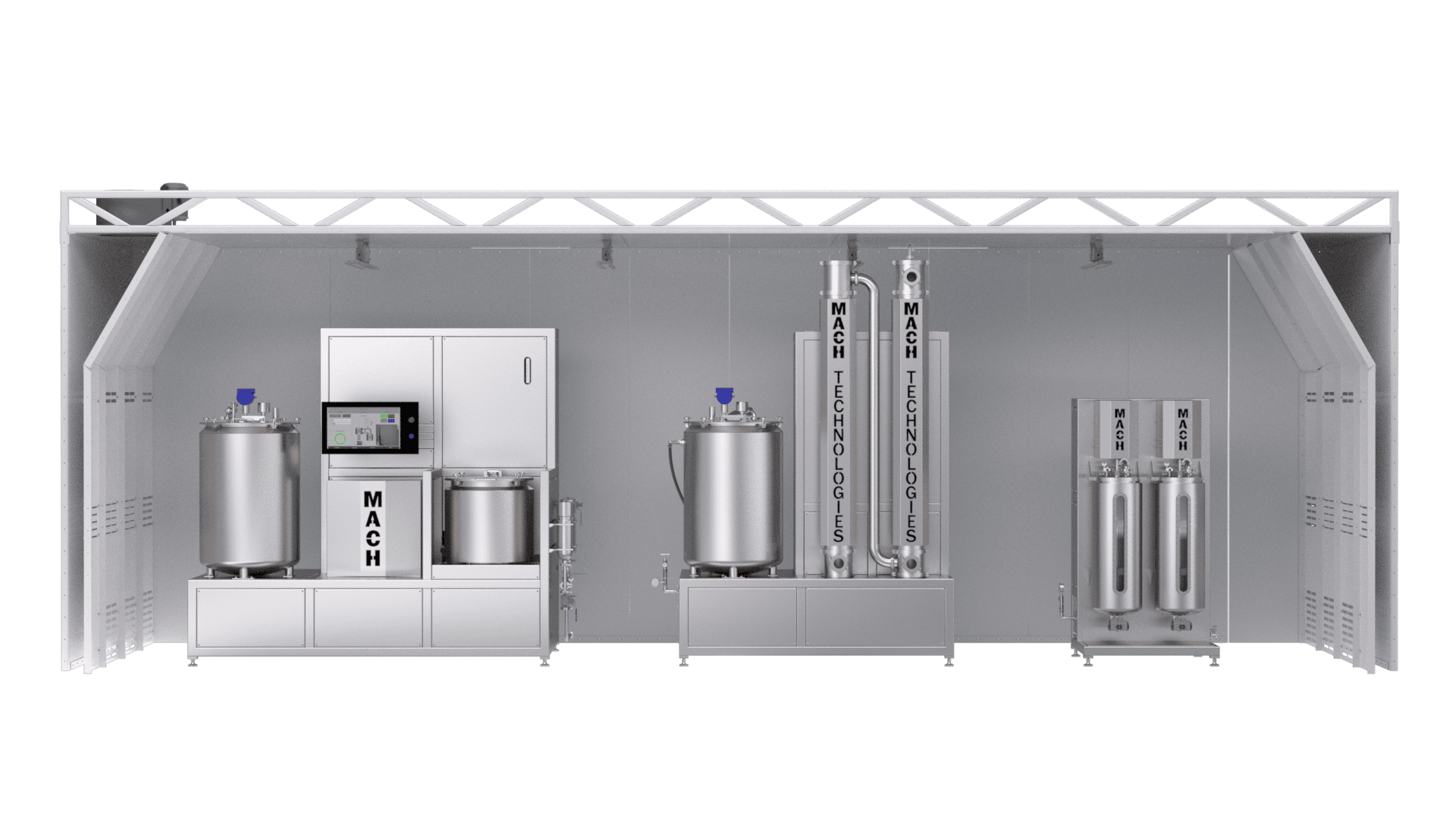
Sized Around the System That Goes Inside It
One engineering group, one submittal package, one drawing set.
- Footprint set against real vessel geometry
- Utility load sized from the actual electrical draw
- Plenum and exhaust rise laid out to the equipment
- Built in one vertically integrated Michigan facility
The common failure mode is procedural, not technical. The enclosure gets bought from a booth fabricator and the extractor from an equipment vendor. Both arrive. Then the fit problems surface: not enough clearance to load a column, the utility entry landing on the wrong wall, exhaust routing that fights the plenum, a control panel with nowhere compliant to sit. Neither supplier owns the discrepancy, and the schedule absorbs it.
Specifying both halves together turns each of those into a decision made in advance rather than a discovery made on the install date. Column loading clearance is set against the actual vessel geometry and the operator's access path, not against a published interior width. The utility entry is placed on the wall the panel and the skid connections both want, so conduit and process lines are not crossing the room. Plenum position and exhaust rise are laid out against the equipment's own heat and vapor sources instead of being ducted around a skid that is already bolted down.
Each named series contributes a specific input to that calculation. AHES-40 automated hydrocarbon extraction systems set the interior width and the door opening, because the column assembly has to come in and be serviced. MHES-20 operator-driven hydrocarbon systems shift the layout toward operator working clearance around the column rather than automation cabinet space. EES Series automated ethanol extraction systems drive the electrical draw the control panel and building feed are sized to. The CES-600 centrifuge extraction system sets loading and unloading clearance at the basket and the floor loading beneath it. ASR-20 automated solvent recovery shares the same envelope, so its service access and its tie-ins are reserved on the drawing before panels are cut, with post-processing and refinement systems sited downstream.
This is possible because design, fabrication, assembly and test all happen under one roof in our vertically integrated Michigan facility, alongside turnkey extraction systems and lab buildouts. Systems ship nationally across the United States. After delivery, installation, operator training and technical support come from the manufacturer that built both halves — not coordinated across two suppliers pointing at each other.
Submittal & Plan Review
What We Document, and What Your AHJ Decides
Written for the engineer walking into plan review.
Here is the correction worth carrying into your review: neither NFPA nor OSHA certifies enclosures. Those bodies publish codes and standards; approval of a specific installation rests with your Authority Having Jurisdiction. Any vendor advertising an NFPA or OSHA certification, or promising compliance as a product attribute, is describing something that does not exist — and operators who believe it walk into permitting with the wrong expectations.
What MACH is not: the Authority Having Jurisdiction, a testing or compliance-certification body, a general contractor, electrician or HVAC firm, or the party that assigns your facility's area classification. That determination belongs to a qualified engineer working from your specific facility and is confirmed with your AHJ before installation. We build to it.
For the broader standards and documentation picture across a facility, see our guide to compliance-grade botanical extraction equipment and GMP-standard lab design.
MACH Technologies manufactures and sells processing equipment. It does not cultivate, produce, sell, or distribute hemp or any botanical end product. Extraction equipment must be installed, permitted, and operated in accordance with all applicable federal, state, and local fire, building, and electrical codes, including Class I Division 1 requirements where applicable. Consult your Authority Having Jurisdiction before installation. Throughput, yield, purity, and solvent recovery figures vary with input material, system configuration, and process parameters; published figures are not a guarantee of results. Operators are responsible for verifying that their intended use is lawful in their jurisdiction.