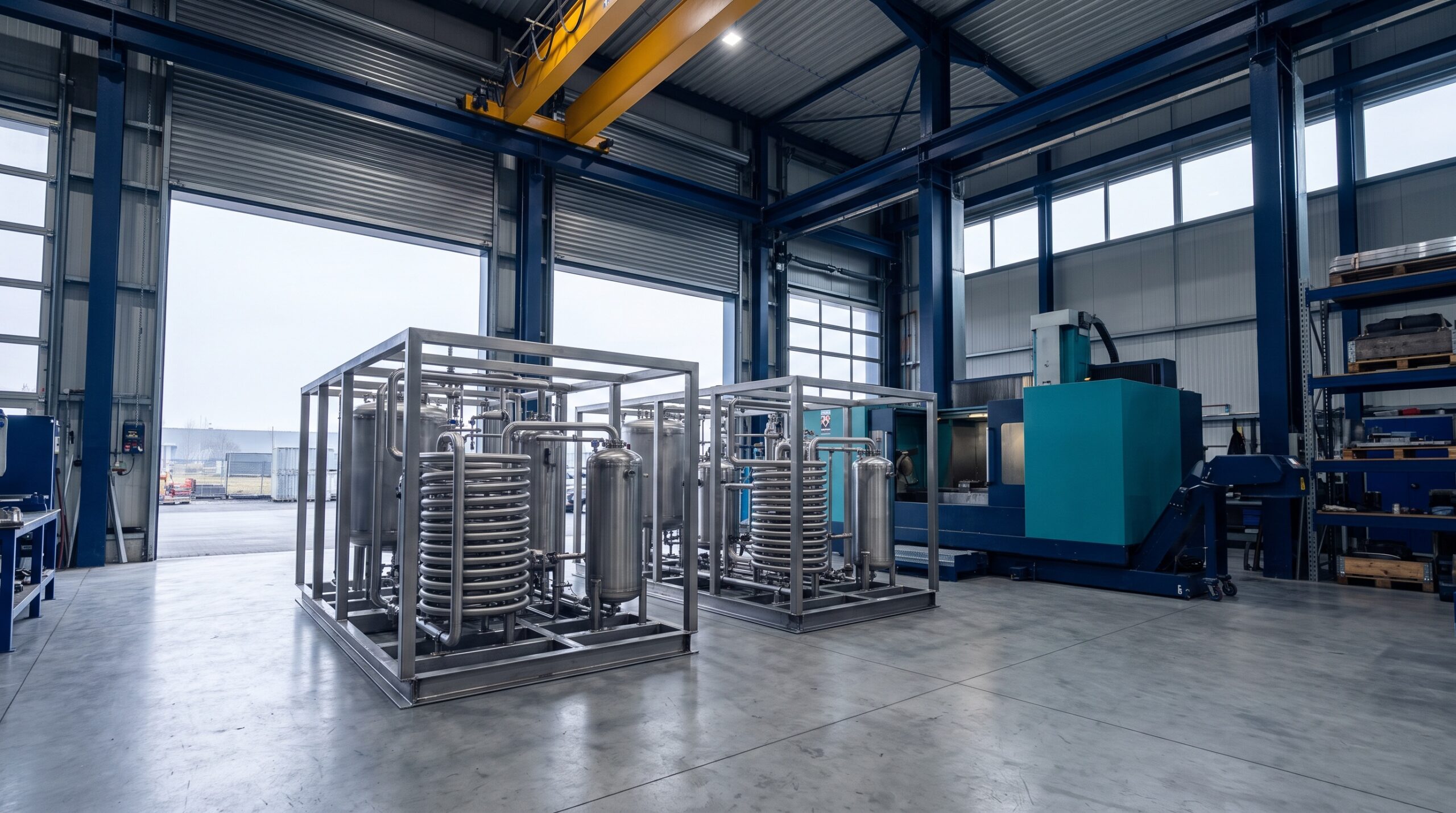

Michigan-built ethanol, hydrocarbon and solventless platforms
Extraction Lab Equipment, Compared on the Three Specs You Lock Before Construction
Throughput per shift, solvent recovery architecture, and the classification your process triggers — scored the same way across ethanol, hydrocarbon and solventless systems.
- Throughput per shift
- Solvent recovery architecture
- Classification trigger
Nearly every extraction platform comparison in this category is published by a manufacturer that builds exactly one platform, and it ends where you would expect. MACH Technologies designs, fabricates, assembles and tests all three — ethanol extraction systems (EES Series automated, M Series semi-automated), hydrocarbon extraction systems (AHES Series automated, MHES Series operator-driven), and solventless equipment (TSS Series cold water production, ATS Pro automated trichome separation) — in one vertically integrated Michigan facility. That is why this page scores the platforms against shared axes instead of arriving at a single recommendation. Equipment across the line is built to CE, IECEx, UL 508A, PSI and ASME compliance marks.
CE · IECEx · UL 508A · PSI · ASME
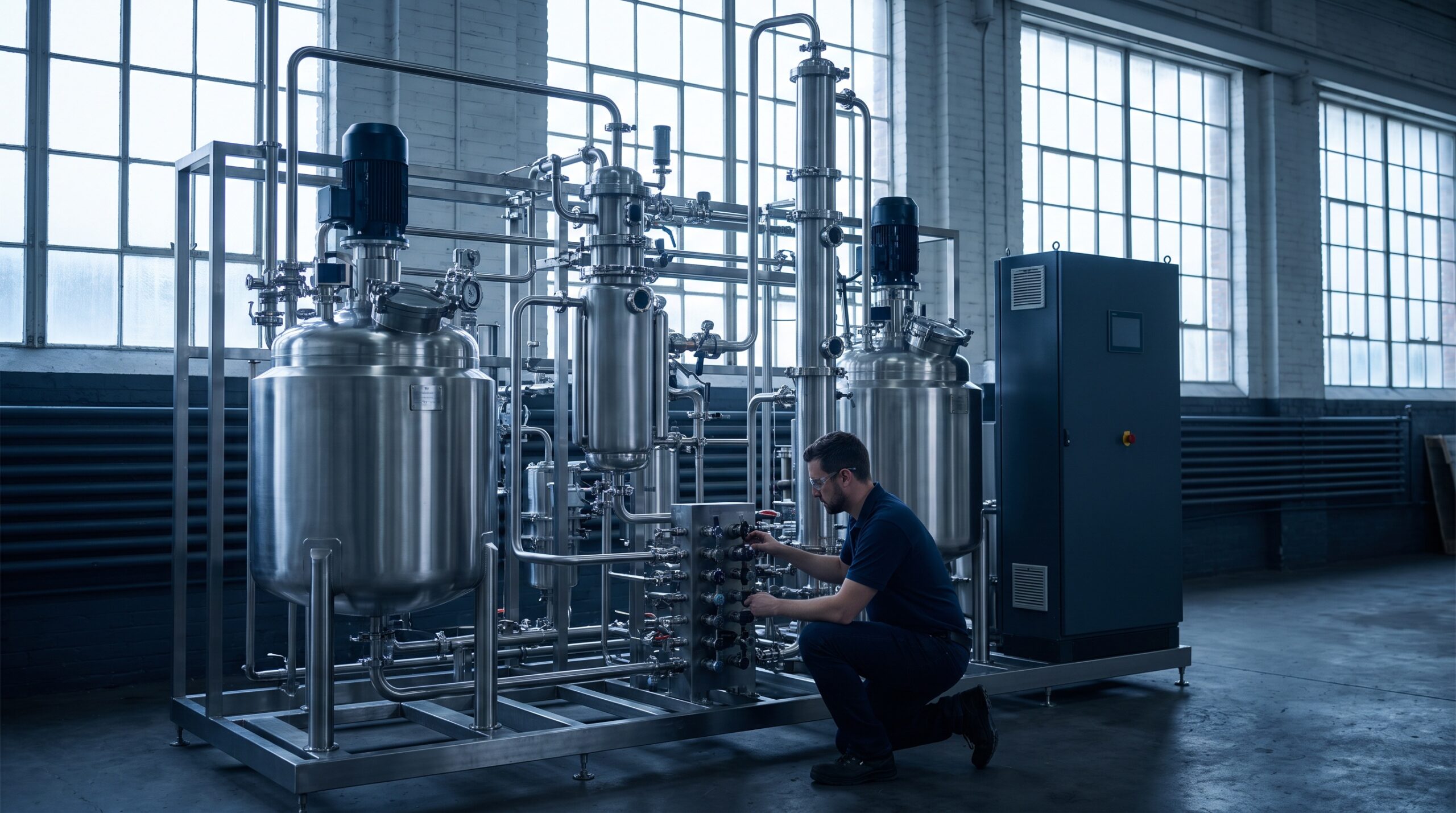
Ethanol · Hydrocarbon · Solventless
Four Axes That Decide the Platform
Score any system on these before you compare price. Three of the four are construction inputs.
-
01
Throughput per shift
Measured as processed input per shift at a stated configuration, not nameplate batch volume. The common error is comparing batch sizes across platforms that run on different cycle times.
-
02
Solvent recovery architecture
Whether recovery is integrated and automated or handled as a separate downstream step. Recovery capacity, not extraction cycle time, is the practical ceiling on daily throughput.
-
03
Classification trigger
The solvent you choose determines the classified area your room has to be. That is a construction input to be settled with your AHJ during design, not a permit detail handled later.
-
04
Utility and post-processing load
Electrical service and panel capacity, process cooling, vacuum, compressed air and inert gas demand — plus the post-processing train the platform implies downstream.
No winner named. MACH designs, fabricates, assembles and tests all three platforms in one vertically integrated Michigan facility — the axes above are scored the same way regardless of which solvent path your build settles on.
Ethanol Extraction Systems: Throughput First, Recovery as the Ceiling
Chilled solvent contact sets the process. Recovery capacity sets the daily number.
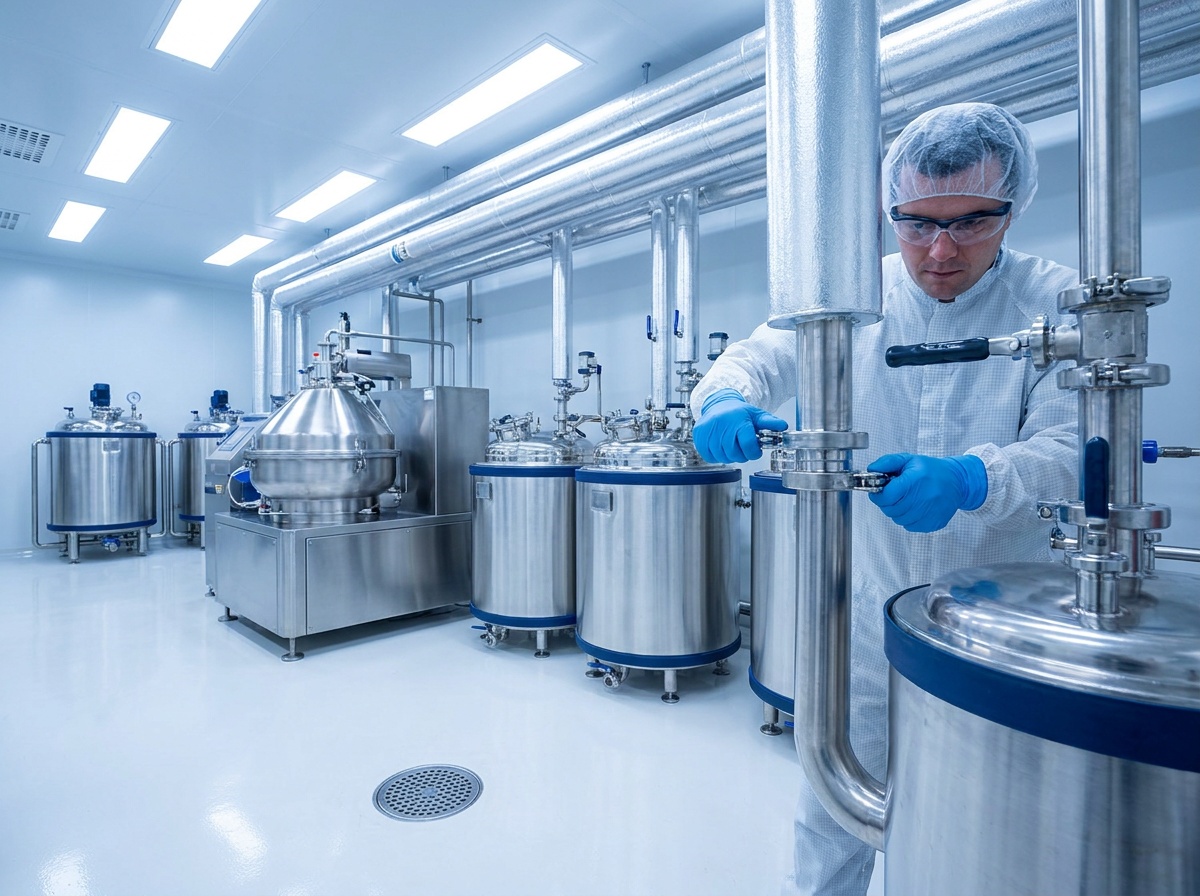
Ethanol systems are defined by contact temperature. Colder solvent contact narrows what comes out of the botanical material and reduces the downstream cleanup burden; warmer contact pulls more, faster, and moves that burden into post-processing. Where you sit on that tradeoff drives almost every hardware decision that follows, and it is a decision to make before you specify vessels.
The throughput consequence is continuous input handling. Centrifuge-based extraction keeps material moving rather than batching it into a soak-and-drain cycle, which is why the CES-600 centrifuge extraction system is the concrete artifact at commodity scale on this platform. But the extraction stage is rarely the constraint. Solvent has to come back out, and it has to come back out at the rate the front end is putting it in. Specify falling film and recovery capacity against your target daily input, not against your batch size — automated solvent recovery and a separate downstream recovery step behave very differently once you are running two or three shifts.
Because the solvent pulls a wider range of compounds, the train behind the extractor is heavier here than on the other two platforms. Plan for winterization, filtration and the refinement steps that follow as part of the same capital decision rather than a phase two.
On classification, ethanol is handled as a flammable liquid rather than a liquefied gas, which generally produces a lighter classified-area scope than hydrocarbon — but scope is set by your process, your quantities and your room, and it is confirmed with your Authority Having Jurisdiction, not from a spec sheet.
MACH builds this platform in two configurations. EES Series automated systems reduce the operator-attention load per shift; M Series semi-automated systems put more of the process in the operator's hands at a lower capital entry point. That choice is a headcount and training decision as much as an equipment one, and both ship with installation, operator training and on-demand technical support.
Throughput, yield and recovery figures vary with input material, system configuration and process parameters; published figures are not a guarantee of results.
Hydrocarbon platform
Hydrocarbon Extraction Systems: Pressure Rating, Recovery Temperature, Classified Area
Two specs separate these systems from each other. A third separates the room they go in.
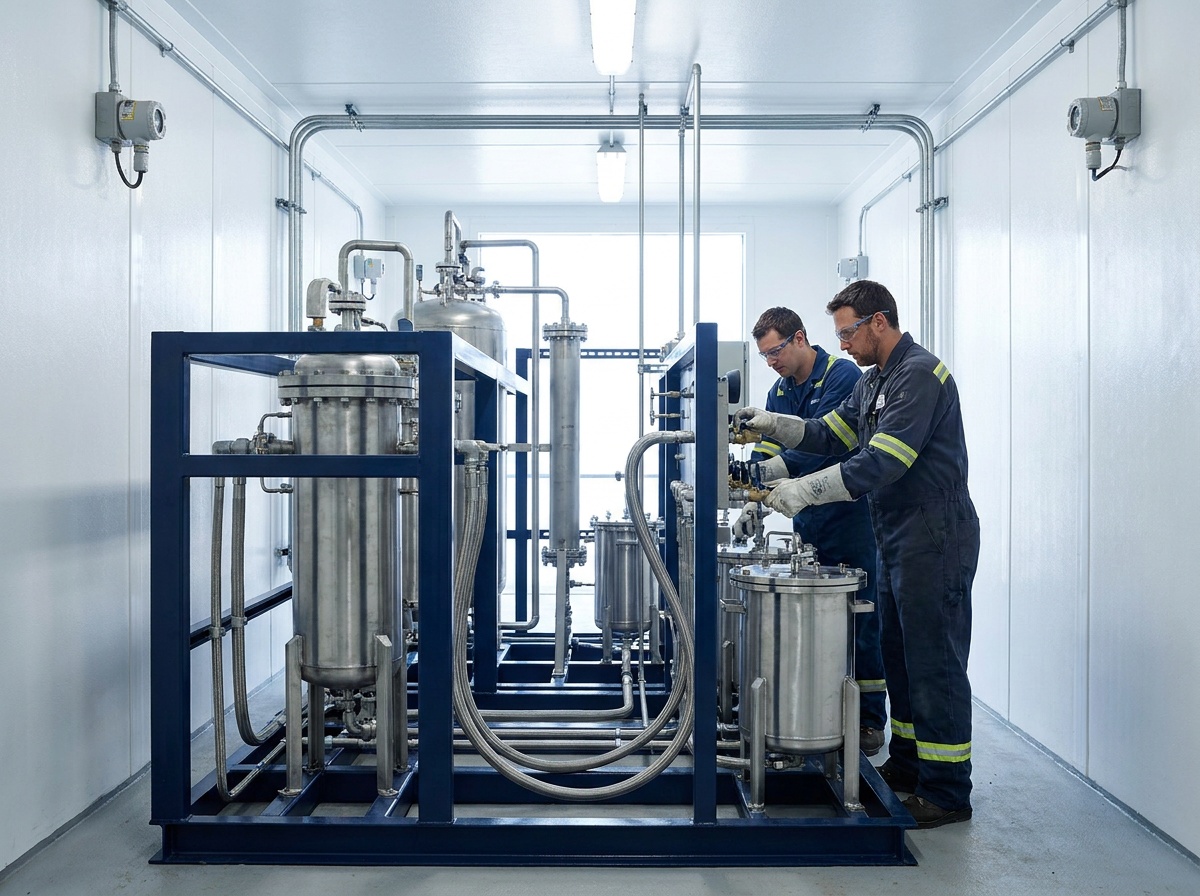
Hydrocarbon systems are specified on pressure and temperature. The solvent arrives as a liquefied gas, so the vessels, fittings and hoses carry a working pressure the whole assembly has to be rated for, and the recovery stage runs at a lower temperature than an ethanol train would. That lower recovery temperature is why this platform is chosen when volatile compounds in the botanical material matter to the finished output.
Solvent selection inside the platform is not a detail. Butane, propane and blended solvents differ in vapor pressure, which changes both the recovery temperature you design for and the pressure rating the vessels must carry. A system sized around one blend is not automatically appropriate for another. Ask the question in purchasing terms: which vessels carry an ASME stamp, what documentation comes with them, and what is explicitly not stamped. ASME is a documentation package you hand to a reviewer, not a badge on a brochure.
Recovery architecture is where automated and operator-driven systems actually diverge. AHES Series automated systems run the recovery sequence with less operator intervention per cycle, which is what makes repeatable shift output realistic; MHES Series operator-driven systems put the sequence under manual control. The scale ladder is concrete: MHES-5 at the entry point, MHES-20 at mid-scale, and AHES-40 where automated throughput is the requirement. If you want the internals before you specify, our walkthrough of the inside of a hydrocarbon extraction system covers the flow path stage by stage, and our look at whether hydrocarbon extraction is a scalable method addresses the throughput question directly.
This platform carries the heaviest classified-area scope of the three. Classification follows from the properties of the flammable material present and how likely a flammable concentration is in a given area, evaluated area by area — and equipment installed there has to be approved for the applicable class, division and group. Practically, that is what drives the enclosure decision: whether you build the classified room or install a rated enclosure such as the EE-2 Series extraction enclosures inside an unclassified space. Our treatment of C1D1 and C1D2 classified enclosure systems and what a C1D1 room requires goes deeper. Confirm the outcome with your Authority Having Jurisdiction before installation.
Every platform is designed, fabricated, assembled and tested in our vertically integrated Michigan facility, with installation, operator training and technical support included in the scope.
Request a system specification reviewPlatform three of three
Solventless Systems: No Recovery Train, Different Throughput Math
Temperature, agitation profile and screen selection replace solvent chemistry as the specification.
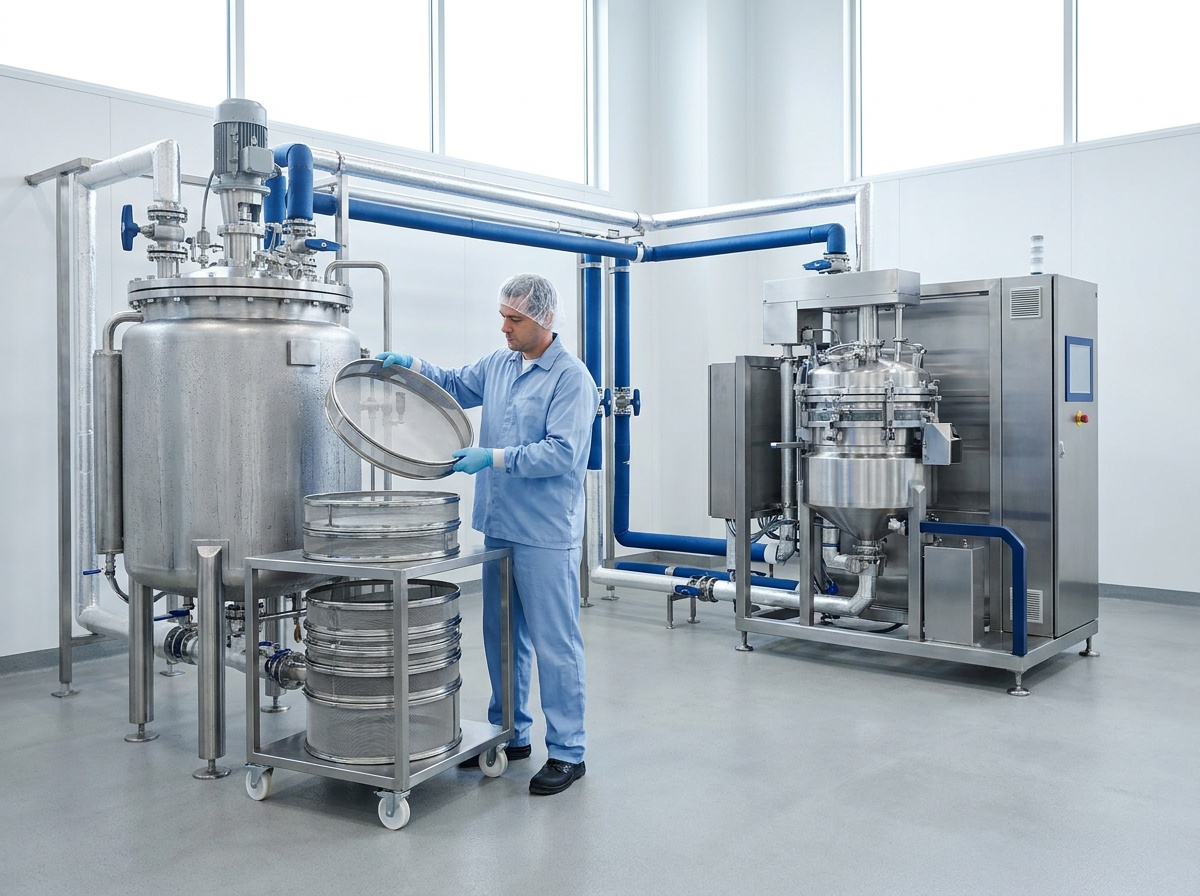
Solventless equipment separates trichomes mechanically. Cold water agitation suspends and releases them from the botanical material; stacked screens size the fraction that gets collected. Dry separation removes water from the equation entirely. Either way, the specification conversation is about temperature control, agitation profile, vessel volume and screen selection — not solvent chemistry. Our overview of solventless extraction methods walks the mechanisms in more detail.
The equipment consequence is straightforward. There is no solvent, so there is no recovery train to size, no solvent inventory to store, and a materially lighter classified-area scope than either solvent platform — which shortens the utility and construction conversation considerably. What the platform trades away is throughput per square foot. Batch volumes are governed by water and material handling rather than by a continuous solvent loop, and cycle time is bounded by wash, settle and collection steps that do not compress well. It is also the platform most sensitive to input material quality: what the field or the room produced upstream shows up directly in what the screens collect, in a way a solvent process partially masks.
Two lines built for this platform
MACH builds two lines here. TSS Series cold water production equipment covers the wash-and-separation stage — the TSS-300 trichome separation system is the concrete artifact — and ATS Pro automated trichome separation handles dry trichome and sift purification where water is not part of the process.
In practice, most operations that install this platform do not install it instead of a solvent system. They add it alongside one to widen the output categories a single facility can produce, using the same building, the same crew and the same refinement equipment downstream. That is the multi-platform facility case, and it is where the specification work stops being about one machine and starts being about the room.
Yield and purity figures vary with input material and process parameters; published figures are not a guarantee of results.
Ethanol vs hydrocarbon vs solventless
What Changes With the Platform — and What Never Does
Six axes, three platforms, scored by relationship rather than invented figures.
Read the matrix as relative positioning at comparable investment levels, not as absolute numbers. Actual figures depend on configuration, input material and process parameters, and we scope them per project rather than publishing them as claims.
-
Throughput ceiling
Ethanol is highest at commodity scale on continuous input handling; hydrocarbon is mid-range and set by recovery cycle time; solventless is lowest per square foot and bounded by wash and collection steps.
-
Solvent recovery architecture
Ethanol requires the most recovery capacity and is where recovery sizing most often becomes the constraint; hydrocarbon recovery runs colder and is the axis on which automated and operator-driven systems diverge; solventless has no recovery train at all.
-
Classified-area scope
Hydrocarbon is heaviest, because the process handles a liquefied flammable gas; ethanol is moderate, handled as a flammable liquid; solventless is lightest. Every case is evaluated area by area against the flammable material actually present, and confirmed with your AHJ.
-
Post-processing train implied
Ethanol is heaviest, given the wider compound pickup; hydrocarbon is moderate; solventless is lightest, though refinement is still an option rather than an exclusion.
-
Utility load profile
Ethanol is dominated by process cooling and recovery heat load; hydrocarbon by cooling, vacuum and inert gas; solventless by chilled water and material handling.
-
Operator headcount
Automated configurations on either solvent platform reduce attention per shift; operator-driven and semi-automated systems trade capital cost for labor; solventless is labor-intensive by mechanism.
What does not change
Now the part a single-platform vendor cannot write: what does not change.
Whatever you extract with, the refinement train converges. Winterization and filtration, decarboxylation, wiped film distillation, terpene distillation, isolate and crystallization are the same equipment decisions in every facility — the WFDS-1S wiped film distillation system, the DS-5050 decarboxylation system, PFS-40 recirculation filtration and the DMU Series crystallization systems sit downstream of all three platforms.
The utility backbone does not change either, and it is a project requirement rather than a delivery detail: electrical service and panel capacity, process cooling, vacuum, compressed air and inert gas have to be sized during design. MACH designs the lab layout and the buildout around the equipment, and works alongside your trades — we are not the electrical, HVAC or construction contractor and do not perform that work. Installation, operator training and on-demand technical support are part of the engagement, not an add-on.
MACH Technologies manufactures and sells processing equipment. It does not process, toll, test, or sell any end product. Installation and permitting must follow all applicable federal, state and local fire, building and electrical codes; consult your Authority Having Jurisdiction before installation.
Ethanol, hydrocarbon and solventless — built under one roof
Bring Us Your Throughput Target and Your Room
Send your target input per shift, your available electrical service and process cooling, your intended solvent, and the room you have or plan to build — our engineering team will scope which platform and which series fits. Systems are designed, fabricated, assembled and tested in our vertically integrated Michigan facility and shipped nationally, with installation and operator training included.
- Throughput per shift scoped to your feedstock volume
- Solvent recovery architecture reviewed per platform
- Electrical service, process cooling and utility backbone
- Room classification triggers checked before construction